Green Chemistry: Principles, Applications, and Pathways to a Sustainable Future
Introduction: Why Green Chemistry Matters:
In today’s world, environmental challenges such as climate change, pollution, and resource depletion are major concerns. As industries grow and technology advances, finding ways to reduce the negative environmental impact of human activities has become increasingly important. One such transformative field is green chemistry.
Green chemistry is the design of chemical products and processes that reduce or eliminate the use and generation of hazardous substances. By focusing on sustainability, green chemistry enables industries to develop processes that are more eco-friendly, cost-effective, and safer for both people and the environment.
This blog will explore the principles of green chemistry, its applications in everyday life, its relationship with the Sustainable Development Goals (SDGs), and its innovative potential for the future.
Principles of Green Chemistry
At the core of green chemistry are 12 guiding principles developed by Paul Anastas and John Warner in the late 1990s. These principles lay out a clear framework for making chemical processes safer, more sustainable, and more resource-efficient. Let's break down the key principles and explore how they help drive a greener future.
1. Prevention
It is better to prevent waste than to treat or clean it up later. This principle encourages industries to design processes that minimize the production of waste at the start, rather than relying on expensive and potentially harmful cleanup measures.
2. Atom Economy
This principle emphasizes the importance of designing chemical processes that use all the starting materials in the final product. The goal is to maximize the efficient use of resources, reducing waste in the process.
3. Less Hazardous Chemical Synthesis
Green chemistry encourages the use of safer chemicals and solvents in the production of goods. Reducing the use of toxic chemicals minimizes harm to both the environment and human health.
4. Designing Safer Chemicals
Chemicals should be designed with minimal toxicity in mind, ensuring that the end products of chemical reactions do not pose a danger to human health or the environment.
5. Safer Solvents and Reaction Conditions
Traditional chemical processes often require the use of toxic solvents and harsh conditions. Green chemistry advocates for safer, less toxic solvents and milder reaction conditions to reduce environmental harm.

6. Energy Efficiency
Green chemistry promotes the use of energy-efficient processes, such as carrying out reactions at lower temperatures and pressures. This reduces energy consumption and the associated environmental impact.
7. Renewable Feedstocks
This principle encourages the use of renewable resources (like plant-based materials) rather than finite, non-renewable resources (such as fossil fuels). This helps create sustainable supply chains and reduces dependence on depleting resources.
8. Reduce Derivatives
Unnecessary steps that create waste should be avoided. If derivatization (chemical modification of molecules) is required, it should be minimized to reduce waste and unnecessary by-products.
9. Catalysis
The use of catalysts in chemical reactions can increase efficiency and reduce waste by allowing reactions to occur with less energy and fewer by-products. Catalysts help drive reactions at lower temperatures and pressures.
10. Design for Degradation
Chemicals should be designed so they can safely degrade into harmless products once their useful life has ended, thus preventing pollution and environmental harm.
11. Real-Time Analysis for Pollution Prevention
By monitoring chemical processes in real-time, industries can detect and correct any issues immediately, reducing pollution during production rather than cleaning it up later.
12. Inherently Safe Chemistry
The safest chemical processes are those that do not pose risks from the outset. Green chemistry aims to design products and processes that inherently avoid risks such as toxicity or flammability.
Poll 1: Which principle of green chemistry do you find most crucial for a sustainable future?
- Prevention of waste
- Atom economy
- Safer chemicals and processes
- Energy efficiency
Applications of Green Chemistry in Everyday Life
Green chemistry isn't just a laboratory concept—its principles have practical applications in our everyday lives. From reducing waste to minimizing harmful chemicals, green chemistry helps us lead more sustainable lives. Let’s take a look at how this science is applied in different sectors.

1. Green Cleaning Products
Traditional cleaning products often contain harmful chemicals that can pollute the air and water. Green chemistry has led to the development of eco-friendly, biodegradable cleaning agents. These products are made from natural, non-toxic ingredients that are safe for both human health and the environment.
2. Renewable Energy Technologies
Solar panels, wind turbines, and biofuels are prime examples of how green chemistry contributes to sustainable energy production. By using renewable resources, such as sunlight or plant-based materials, these technologies help reduce our dependence on fossil fuels and decrease greenhouse gas emissions.
3. Biodegradable Plastics
Plastic pollution is one of the most pressing environmental challenges. Green chemistry has introduced biodegradable plastics, which break down more easily in the environment than conventional petroleum-based plastics. Made from renewable sources like corn starch, these materials reduce plastic waste and its harmful effects on ecosystems.
4. Pharmaceutical Industry
In pharmaceutical production, green chemistry principles have been used to reduce the environmental impact of drug manufacturing. Safer solvents, more efficient reaction pathways, and reduced toxic by-products have led to cleaner, more sustainable drug production processes.
5. Water Purification
Green chemistry plays an important role in water treatment technologies. For example, the use of eco-friendly nanomaterials can help purify water by removing toxins and pollutants without introducing harmful chemicals into the environment.
6. Sustainable Agriculture
In agriculture, green chemistry has led to the development of more sustainable farming practices. For example, the use of bio-based pesticides and fertilizers reduces the environmental impact of conventional farming, promoting healthier soil and ecosystems.
Poll 2: Do you currently use any eco-friendly products (e.g., biodegradable cleaners, renewable energy)?
- Yes, I regularly use eco-friendly products.
- Sometimes, but not consistently.
- No, I haven't adopted any yet.
Linking Green Chemistry to the Sustainable Development Goals (SDGs)
Green chemistry has a direct impact on several of the United Nations Sustainable Development Goals (SDGs). These global goals, which address various environmental and societal challenges, align perfectly with the objectives of green chemistry.
SDG 3: Good Health and Well-being
By minimizing the use of toxic chemicals and reducing pollution, green chemistry helps improve air quality and reduce exposure to harmful substances, thus supporting better health outcomes for communities.
SDG 6: Clean Water and Sanitation
Green chemistry is critical in developing water purification technologies that minimize the use of hazardous chemicals, ensuring access to clean and safe drinking water for all.
SDG 7: Affordable and Clean Energy
The transition to renewable energy sources, such as solar power and biofuels, is a key focus of green chemistry. By developing sustainable and eco-friendly energy solutions, green chemistry helps reduce carbon emissions and supports clean energy innovation.
SDG 9: Industry, Innovation, and Infrastructure
Green chemistry fosters innovation in industrial processes by encouraging the use of safer chemicals, more efficient production methods, and sustainable technologies. This drives the development of greener infrastructure and more sustainable industries.
SDG 12: Responsible Consumption and Production
Green chemistry promotes the responsible use of resources, waste reduction, and the creation of environmentally friendly products. It aligns with the goal of more sustainable consumption and production practices.
SDG 13: Climate Action
By focusing on reducing waste, energy consumption, and greenhouse gas emissions, green chemistry contributes to the fight against climate change. Its innovations in energy efficiency and carbon reduction play a significant role in mitigating climate-related impacts.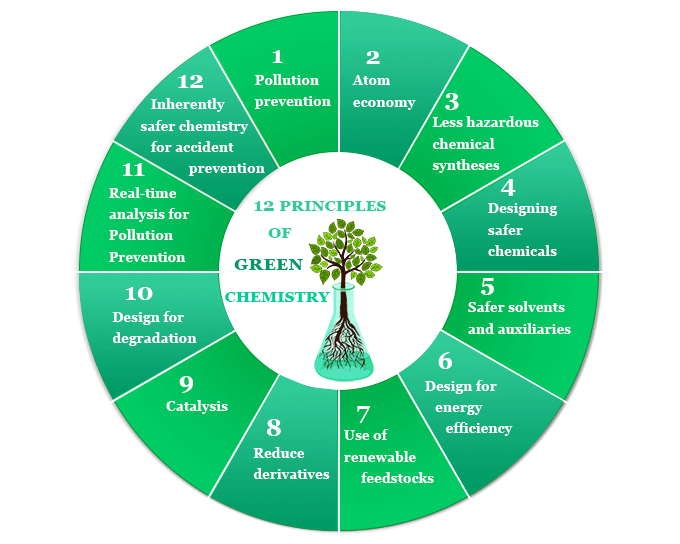
Poll 3: Do you think green chemistry can help achieve the SDGs?
- Yes, it plays a significant role.
- It helps, but other actions are more important.
- No, I think other factors are more crucial.
Innovative Ideas for the Future of Green Chemistry
The future of green chemistry is filled with exciting possibilities. Let’s explore some innovative ideas that could shape a sustainable world in the coming years.
1. Artificial Photosynthesis
Mimicking the natural process of photosynthesis, researchers are developing technologies to capture sunlight and convert it into chemical energy. This could potentially provide a renewable, clean energy source to replace fossil fuels.
2. Green Nanotechnology
Nanotechnology offers a promising avenue for green chemistry. Green nanotechnology focuses on creating materials at the nanoscale that are both efficient and environmentally friendly. These materials could be used for energy storage, water purification, and even medical applications.
3. Biocatalysis
Biocatalysis uses natural enzymes to speed up chemical reactions. This green chemistry innovation can replace toxic chemicals and hazardous reagents, leading to cleaner, more sustainable chemical processes.
4. Carbon Capture and Utilization (CCU)
CCU technologies capture carbon dioxide from industrial emissions and convert it into useful products, such as chemicals or fuels. This innovation could play a critical role in reducing global carbon emissions and combating climate change.
5. Zero-Waste Manufacturing
The concept of zero-waste manufacturing aims to eliminate waste by reusing all by-products and materials in a closed-loop system. This innovative approach can help industries reduce their environmental footprint and contribute to a more sustainable economy.
Poll 4: Which of these innovations do you think has the greatest potential for sustainability?
- Artificial photosynthesis
- Green nanotechnology
- Biocatalysis
- Carbon capture and utilization

Challenges and Future Scope of Green Chemistry
Despite its numerous benefits, green chemistry faces challenges that need to be addressed for widespread adoption. Some of the primary hurdles include:
1. Economic Viability
Green chemistry processes often require high initial investments, which can deter businesses from adopting them. However, in the long term, these processes may lead to cost savings due to improved efficiency and reduced waste disposal costs.
2. Scalability
While green chemistry works well in laboratory settings, scaling up to industrial production can be challenging. Researchers are working on improving the scalability of green chemistry processes to ensure they can be adopted by industries globally.
3. Lack of Awareness
Many consumers and businesses are still unaware of the benefits of green chemistry. Increased awareness and education about the importance of sustainable chemistry could accelerate the adoption of green practices.
4. Regulatory Barriers
In some regions, regulations do not adequately support or incentivize green chemistry practices. Governments need to develop policies that encourage industries to adopt greener processes and technologies.
Future Scope
The future of green chemistry looks promising, with exciting innovations on the horizon. As industries face increasing pressure to adopt sustainable practices, green chemistry will play a pivotal role in helping create a cleaner, healthier, and more sustainable world.
Conclusion
Green chemistry provides a pathway to more sustainable chemical processes that can reduce pollution, conserve resources, and promote human health. Its principles, when applied to industries such as pharmaceuticals, energy, agriculture, and manufacturing, lead to cleaner, more eco-friendly practices. By linking green chemistry to the SDGs, we see that this field has the potential to contribute significantly to global sustainability goals.
Despite the challenges it faces, green chemistry holds great promise for the future, offering innovative solutions to some of the world's most pressing environmental issues.
References
- Anastas, P.T., & Warner, J.C. (1998). Green Chemistry: Theory and Practice. Oxford University Press.
- Green Chemistry: Theory and Practice by Paul Anastas and John Warner
- U.S. Environmental Protection Agency (EPA), Green Chemistry.

Comments
Post a Comment